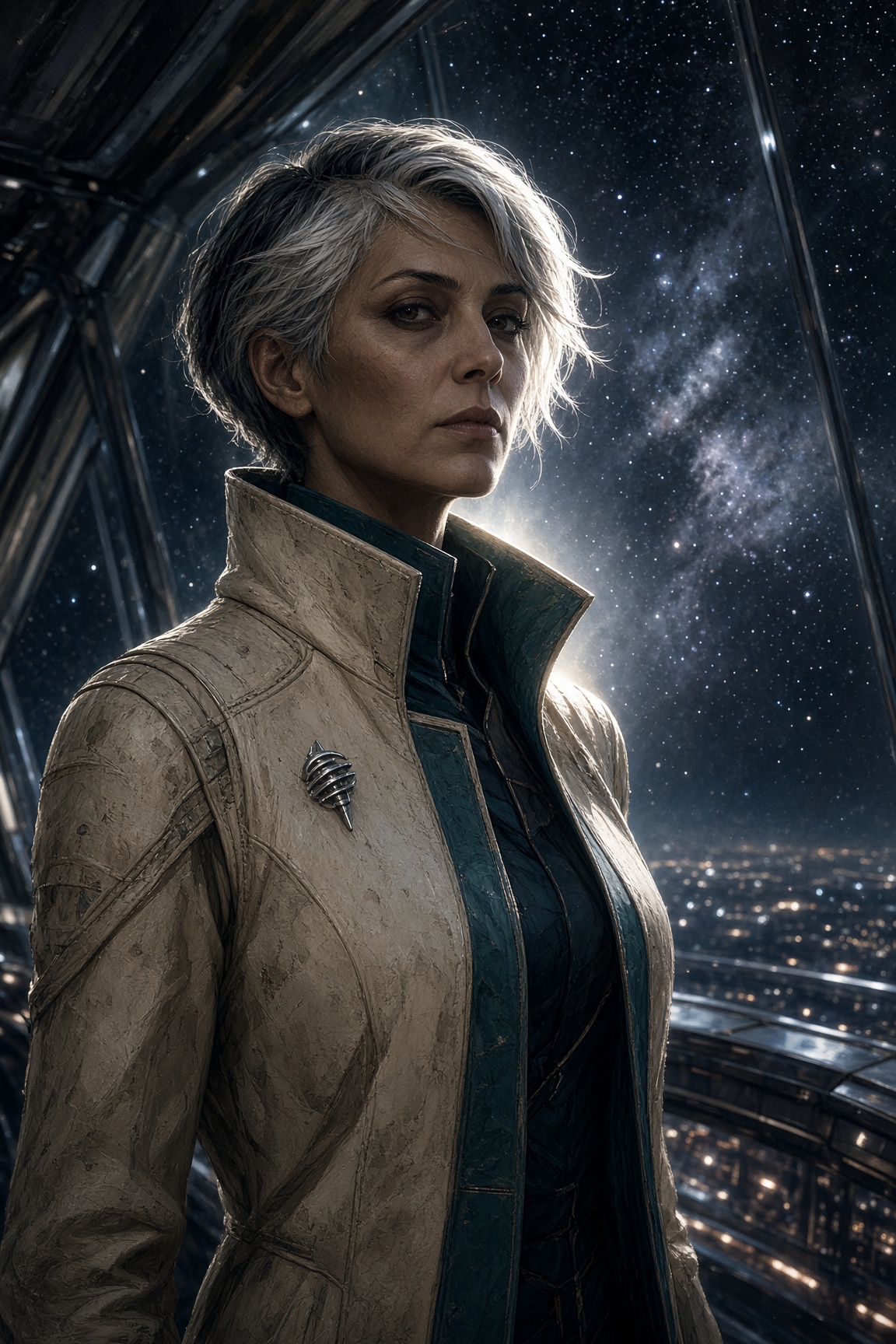
Helix Concord
Chart. Speak. Shield.
The survey corps that wrote the Accord: no world is claimed until it is understood. Their relays drink the Helix's starlight and turn it into law.
CODEX
Sixty-one folds of the Helix, and a treaty for fighting over them. The Accord has three laws: no world is claimed until it is understood; when hulls meet, the table decides; the Accord is rewritten every war-season. Two layers share one season: a hex chart of the known and unknown void, and a card clash whenever fleets or away teams occupy the same fold.
The chart is a hex map — sixty-one folds, most of them dark. Capitals, yards, veins, archives, worlds, and stations sit among open void. You begin at Helix Prime with a Survey Keel: a short fuel tank and a two-hex jump. Better hulls, refit at a yard you hold, carry more fuel and jump farther.
Each command you get two actions. Jump costs fuel equal to the hex distance (nebulae cost one extra). Empty space can be quiet, or it can be salvage, a story, or an ambush. Named worlds you know, you choose. Unknown folds you may probe — spend a glass to learn the name, and sometimes to find parts, cards, or another probe. Sectors remember who claimed them. Enclaves of the two compacts not at war this season still hold worlds in the deep chart, and want to talk first.
Cyan rings are in jump range — tap one, then Jump, or tap it a second time to leap. Pale rings are in probe range. Harvest only works on a world you already hold, with your fleet sitting on it. You can change compact or strike the chart from Command at any time; a clash can be yielded if the table turns.
Take Holdfast Apex, the far capital, or hold seven prize worlds, to win the season and write the next Accord. Between clashes you stock isotope (packs and extra Flux), plating (hulls), and cipher. The table is still how a war is decided.
HQ walks Chapter I (harvest, jump, probe, away team, table, refit) then Chapter II: a prize world, event glass from a probe, a clash, and a campaign officer in the hold. Event shinies and heroes are not in Armory packs — they drop from the dark and from the journal.
A clash is a constructed-card fight. Relays tap for Flux. Personnel and ships enter the line. Directives are slow orders; Interrupts can answer a declared strike. Commanders start in play. Reduce the other compact's Integrity to zero. Away-team clashes strip ships from the deck — this is a planet, not a void.
Units carry six statistics: Command, Tactical, Science, Engineering, Diplomacy, Will. Story files test them. Keywords do the rest: Dash (no summoning delay), Brace (first strike), Cloak (enters cloaked; cloaked units cannot be blocked until they strike), Overwhelm, Ward, Honor (+1 attack while it attacks), Mesh, Board. The four starters are tuned to the same table — none is meant to be a wall.
A 44-card war-season set, marked S1 on the card. Banner War packs (5 cards, 120 isotope) hold only Season I cards: three commons, an uncommon (15% rare), and a rare (12% legendary).
Chart. Speak. Shield.
The survey corps that wrote the Accord: no world is claimed until it is understood. Their relays drink the Helix's starlight and turn it into law.
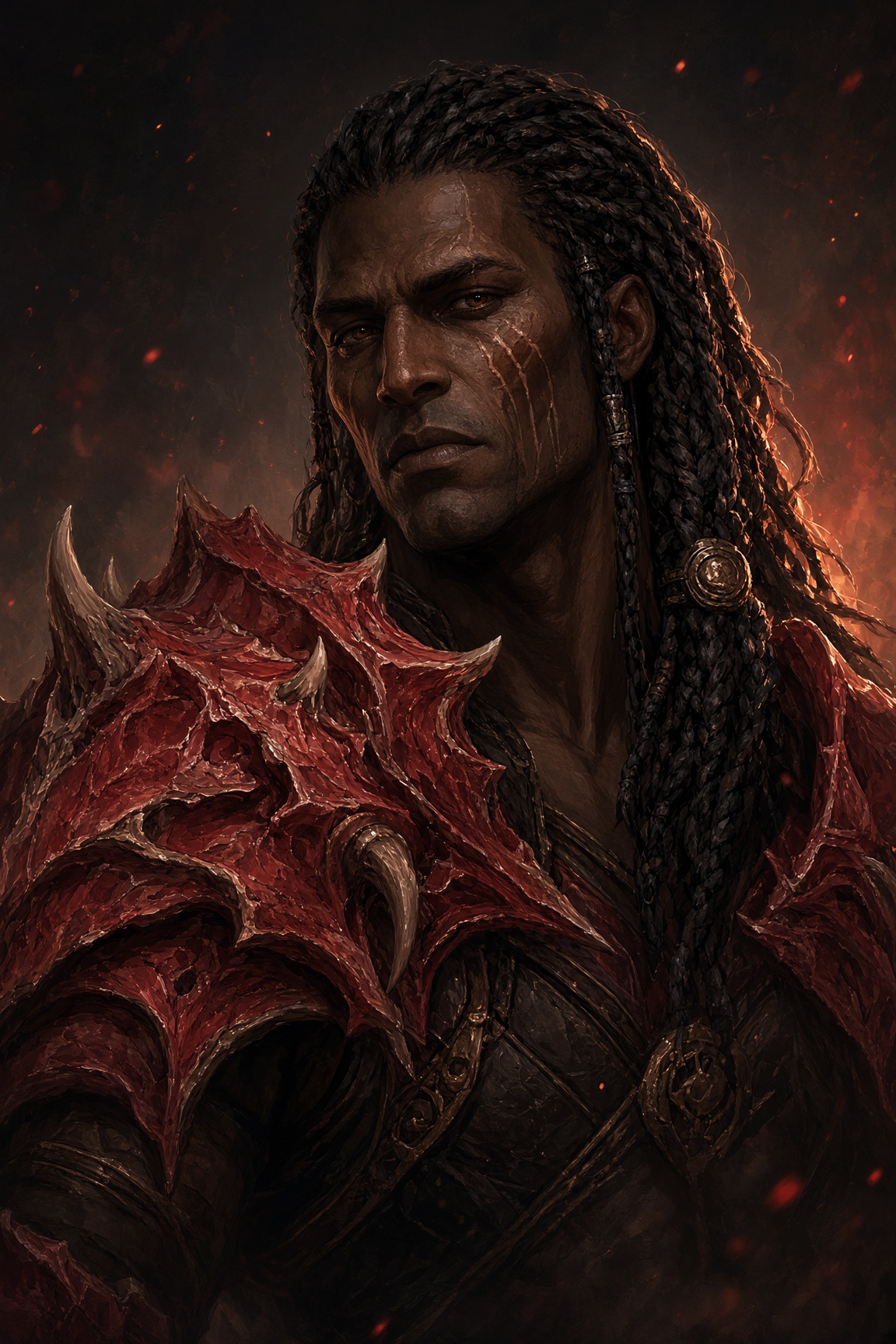
Honor is a blade.
The Houses duel for the right to carry the Banner each war-season — a custom the Accord borrowed. A captain who dies without a named rival never lived.
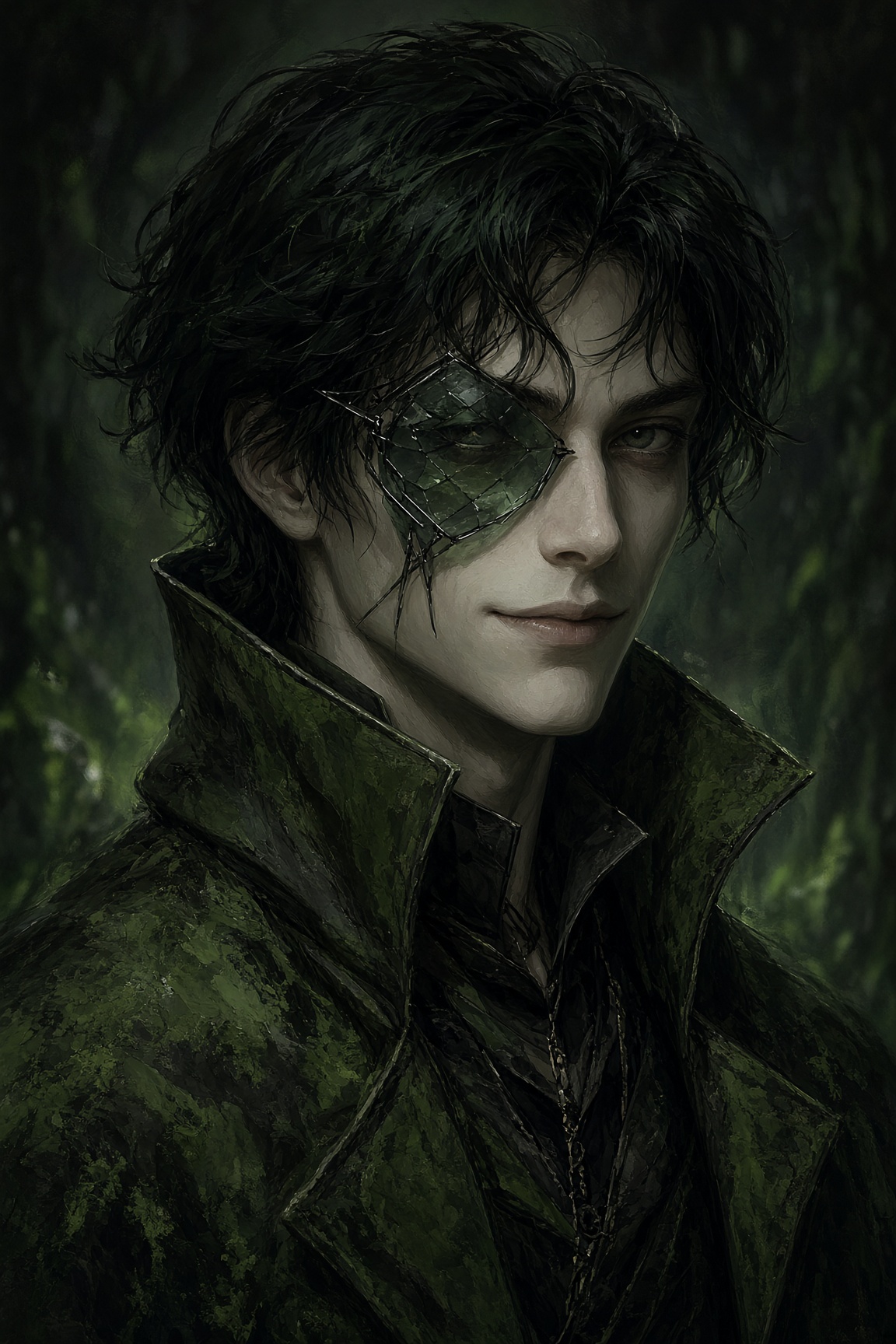
Unseen is unopposed.
Once the Accord's own vote-counters, now a compact that votes in the dark. A motion spoken aloud has already failed. Their crescent hulls arrive after the argument is over.

We become.
Not a people — a decision that learned to walk, grown on the Helix's oldest pylons. Each tetrahedron is a vote. When it wants a mind, it offers a quieter kind of peace.